A new garden table with matching chairs is an acquisition you make rarely – but use for a long time. That is precisely why it is worth taking a close look at the material, size, weather resistance and maintenance effort before buying. Those who only focus on appearance or price often regret their decision after the first season due to faded surfaces, wobbly frames, or chairs that are simply too bulky for the balcony.
This guide does not replace an independent laboratory test of individual products – reliable, current test results for specific garden furniture sets are not currently available in verifiable form. Instead, we systematically compare the relevant material types, designs, and equipment variants available on the market in 2026, and show what really matters when making a selection. This way, you can make an informed decision – whether for a small balcony table or a large patio set for the whole family.
The most important garden table and garden chair types at a glance
Before you decide on a specific set, an overview of the common material categories and their fundamental properties will help:
• Aluminum sets: lightweight, rust-free, low-maintenance, usually mid to higher price segment
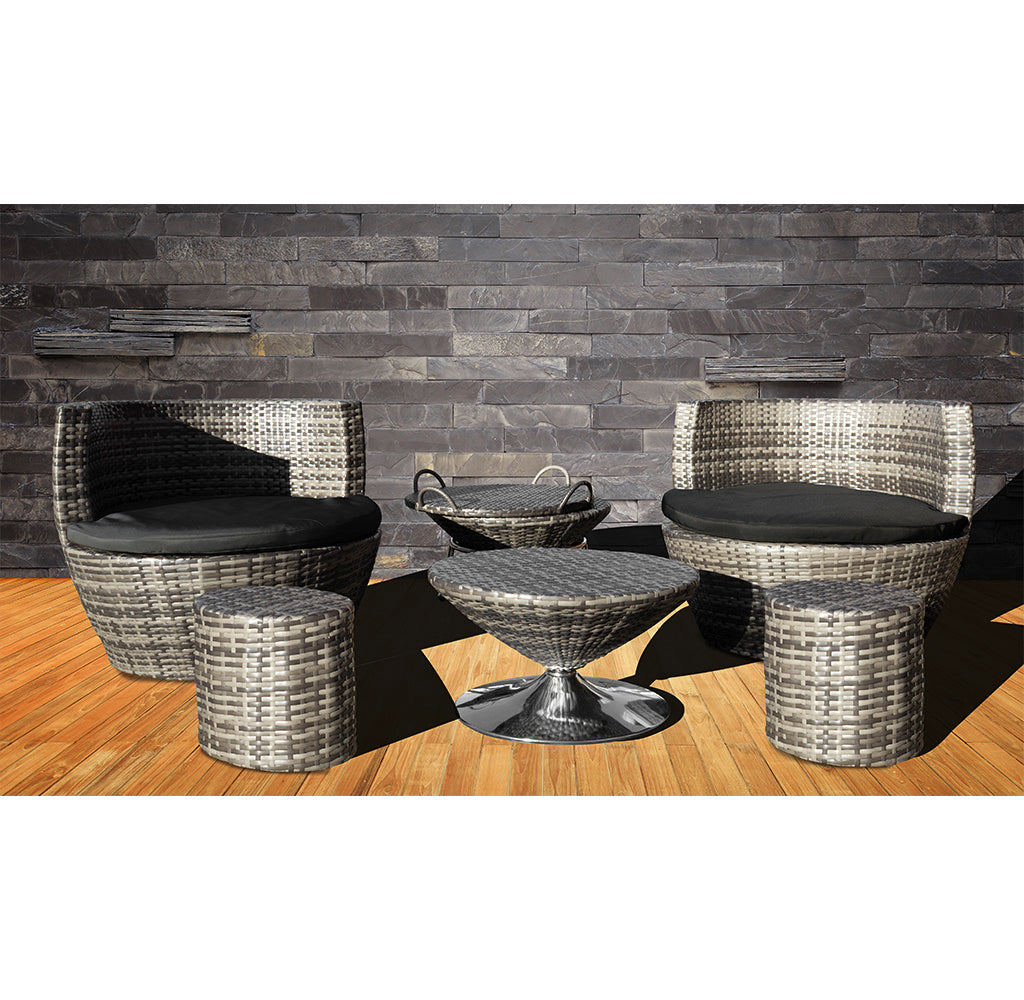
• Polyrattan/Wicker sets: weatherproof, high-quality appearance, often combined with aluminum or steel frames
• Wood sets (acacia, teak, eucalyptus): natural look, require regular maintenance, varying weather resistance depending on wood type
• Steel sets: very stable and durable, tends to be heavier, pay attention to rust protection
• HPL sets (High Pressure Laminate): extremely low-maintenance and colorfast, mostly for table tops, often combined with an aluminum frame
Each of these categories has specific strengths – the right choice depends on the location, intensity of use, and desired maintenance effort.
Comparison Table: Material Types for Garden Table and Chair Sets
|
Material Type |
Best suited for |
Weather resistance |
Care |
Weight |
Price* |
Advantages |
Limitations |
|
Aluminum |
Patio, garden, year-round |
Very high, rust-free |
Low |
Light |
Medium–high |
Rust-free, durable, light |
Can get very hot |
|
Polyrattan/Wicker |
Patio, lounge area |
High (depending on quality) |
Low–medium |
Medium |
Medium–high |
High-quality look, comfortable |
Can become brittle over years due to UV |
|
Wood (Teak) |
Garden, permanently outdoors |
High (oily) |
Medium |
Heavy |
High |
Very durable, natural look |
Higher price, maintenance effort |
|
Wood (acacia/eucalyptus) |
Terrace, seasonal |
Medium |
Medium–high |
Medium–heavy |
Low–medium |
Cheaper, warm look |
Winter protection/storage necessary |
|
Steel |
Garden, highly frequented |
High (coated) |
Low–medium |
Heavy |
Medium |
Very stable, tilt-resistant |
High weight |
|
HPL (tabletop) |
Balcony, terrace, everyday |
Very high |
Very low |
Light–medium |
Medium |
Scratch/colorfast, heat resistant |
Mostly only as tabletop |
*Price categories are general market classifications and not specific price indications, as these vary greatly depending on size, features, and provider.
The most important purchase criteria in detail
1. Location: balcony, terrace, or garden
The location largely determines which set is sensible:
• Balcony: Space-saving, lightweight, ideally foldable or stackable models are advantageous. A fold-out wall table or a compact bistro set requires significantly less space than a classic 6-person set.
• Terrace: Usually more space available, allowing for larger tables and more comfortable chairs with armrests. Weather protection also extends the lifespan.
• Garden (freestanding): Full weather exposure requires particularly resistant materials such as aluminum, coated steel, or teak wood. A cover or dry winter storage is particularly important.
2. Number of people and table size
As a rough guide:
|
Number of people |
Table length (rectangular) |
Table diameter (round) |
|
2 people |
from approx. 70–90 cm |
from approx. 60–70 cm |
|
4 people |
approx. 110–140 cm |
approx. 90–110 cm |
|
6 people |
approx. 150–180 cm |
approx. 130–150 cm |
|
8 people and more |
from approx. 200 cm or extendable |
rarely practical |
These values are general guidelines from the furniture industry and may vary depending on chair width and desired seating distance. Extendable tables offer additional flexibility for guests without permanently taking up space.
3. Weather Resistance
Not every material is equally robust against rain, UV radiation, and frost. Generally speaking:
• Aluminum and powder-coated steel are rust-free or rust-protected and suitable for outdoor use year-round.
• Poly rattan is weather-resistant, but should ideally be protected from extreme prolonged sun exposure to prevent premature embrittlement.
• Natural wood requires protective treatment (oil, glaze) depending on the wood type and should be stored dry or covered in winter.
• HPL surfaces are considered particularly weather and UV stable.
4. Maintenance Effort
Those who want to spend little time on furniture care are well advised to choose aluminum, HPL, or powder-coated steel. Natural wood, on the other hand, scores with its appearance and longevity, but requires regular retreatment – usually once or twice a year for teak, sometimes more frequently for lighter wood types.
5. Budget
The price of a set strongly depends on the material, size, quality of workmanship, and features (e.g., upholstery, adjustable backrests). Instead of focusing solely on the purchase price, it's worth considering the lifespan: A high-quality aluminum or teak set can be used for many years, while cheaper entry-level models may need to be replaced sooner.
6. Installation and Handling
Most garden furniture sets are delivered partially assembled or for self-assembly. Important things to check:
• How many people are needed for assembly (especially for large tables)?
• Is it necessary to move the furniture daily – then low weight is relevant?
• Are the chairs stackable or foldable to save space when storing?
7. Safety and Stability
A stable stand is particularly important in windy locations on balconies or open terraces. Pay attention to:
• Non-slip or height-adjustable feet for uneven surfaces
• Sufficient self-weight or anchorable constructions for wind-exposed locations
• Rounded edges and tested fittings, especially if children are at the table
Decision Matrix: Which Set Suits Whom?
|
Reader Situation |
Recommended Material Type |
Recommended Design |
|
Small balcony, little storage space |
Aluminum or HPL |
Foldable wall table or bistro set with 2 folding chairs |
|
Terrace, frequent use in summer |
Poly rattan or aluminum |
Set with upholstered chairs, possibly with armrests |
|
Large garden, year-round outdoors |
Coated steel or teak wood |
Fixed, heavy set with high wind stability |
|
Frequent guests, fluctuating number of people |
Aluminum or wood |
Extendable table with stackable chairs |
|
Budget-conscious entry |
Acacia wood or simple aluminum |
Compact 4-person set |
|
Little time for maintenance |
Aluminum, HPL or coated steel |
Set according to personal aesthetic preference |
Common mistakes when buying garden tables and chairs
1. Size underestimated or overestimated: A table that is too large looks overwhelming on small patios, while a table that is too small is not enough for several guests. Before purchasing, accurately measure the available area, including space for chairs to move.
2. Material chosen without regard for location: Natural wood without a roof in a fully sunny, exposed garden requires significantly more maintenance than in a sheltered location.
3. Weight of furniture not considered: If you frequently want to move furniture or store it seasonally, you should pay attention to manageable weight.
4. Chair comfort neglected: Especially for longer outdoor meals, it is worth looking at seat depth, backrest angle, and whether cushions or pillows are included or can be added later.
5. Maintenance instructions ignored: Even weatherproof materials benefit from regular cleaning and, for wood, from refinishing – if this is neglected, the lifespan noticeably decreases.
6. Winter storage not planned: If you do not have dry storage space, you should factor in more weather-resistant materials or suitable protective covers when making your purchase decision.
Care, cleaning and storage: Practical tips
• Aluminum: Clean regularly with mild soapy water, do not use abrasive cleaners to protect the coating.
• Polyrattan: Clean with a soft sponge and water, avoid direct heat sources and aggressive cleaners.
• Natural wood: Oil or glaze regularly according to the type of wood and manufacturer's recommendations, especially before and after the winter season.
• Steel: Look out for paint damage and repair it promptly to prevent corrosion.
• General: A weatherproof cover additionally protects all materials from moisture, leaves and UV radiation if no storage option is available. For the cold season, dry, frost-free storage is recommended where possible.
Conclusion: How to make the right decision
There is no single "best" garden table and chair set for everyone – the right choice depends on the location, available space, desired maintenance effort, and budget. For low-maintenance, year-round outdoor use, aluminum and coated steel are particularly suitable. If you value a warm, natural look and are willing to invest some maintenance effort, wooden sets – especially teak – offer a durable solution. Polyrattan offers a good compromise between appearance, comfort, and weather resistance, while HPL table tops are particularly suitable for heavily used, low-maintenance everyday use.
Before making a decision, it's worth precisely measuring your patio or balcony area, realistically assessing the actual frequency of use, and honestly evaluating your willingness to perform maintenance. This way, you avoid bad purchases and find a set that will bring joy for many seasons.
If you are looking for suitable garden furniture, cushions, or complementary accessories such as windbreaks or sun protection for your patio, take a look at the corresponding categories – there you will find a selection of models in various materials and sizes for balconies, patios, and gardens.
Frequently Asked Questions (FAQ)
Q: What material is best for garden furniture that stays outside all year?
Aluminum and powder-coated steel are considered particularly weather-resistant and low-maintenance, as they do not rust and require little retreatment. Natural wood can also stay outdoors all year, but should be regularly cared for and ideally protected from continuous rain.
Q: What table size is suitable for four people?
As a guideline, rectangular tables of about 110–140 cm in length or round tables of about 90–110 cm in diameter are suitable. The actual size needed also depends on the chair width and the desired seating distance.
Q: Is polyrattan garden furniture weatherproof?
High-quality polyrattan is generally weatherproof and designed for permanent outdoor use. However, with intensive, long-term UV exposure, the weave can lose flexibility over time, which is why additional sun protection can extend its lifespan.
Q: What garden furniture is suitable for a small balcony?
For small balconies, lightweight, space-saving solutions are recommended, such as folding wall tables, bistro sets with two chairs, or stackable chair models that can be compactly stored when not in use.
Q: How do I properly care for teak garden furniture?
Teak wood should be oiled regularly, usually once or twice a year, according to the manufacturer's recommendations, to maintain its natural resistance and slow down greying, if desired. Untreated teak wood naturally greys over time, which many users find aesthetically pleasing.
Q: Does garden furniture need to be stored indoors during winter?
That depends on the material. Aluminum, powder-coated steel, and HPL surfaces can generally remain outdoors in winter, provided they are covered dry. Natural wood should, if possible, be stored dry and frost-protected, or at least well covered, to prevent moisture damage.
Q: How much does a good garden furniture set cost?
The price range is wide and depends on the material, size, workmanship, and features. General price statements are therefore not very informative; a comparison of current offers in the desired material segment provides a more realistic estimate.
Q: Are stackable garden chairs stable enough for everyday use?
Stackable chairs made of aluminum or robust plastic are designed for regular use and generally offer good stability. When choosing, it's worth looking at the maximum load capacity and the quality of the joints and connections.
Q: How do I find out if a garden table is wind-stable for my patio?
A higher intrinsic weight and a wide base generally increase wind stability. For highly wind-exposed locations, additionally weighted table feet or fixed anchoring may be useful.
Q: Do I need pads or cushions for more seating comfort?
Matching pads significantly increase seating comfort, especially for chairs made of metal or hardwood. Weatherproof pad fabrics are recommended if the furniture is to remain outdoors permanently.